
A dating app can turn desire into a reflex. A thumb moves left, right, left, left, right. A face appears for half a second, then disappears. In that brief moment, a person gets reduced to a photo, a job title, a height, a joke, or the absence of one.
Dating apps did not invent superficial attraction, rejection, or heartbreak. People have always made quick judgments. What apps changed is the speed, scale, and emotional distance of those judgments. They place hundreds of potential partners behind a screen and invite users to keep sorting.
That design has reshaped modern dating in a quiet but powerful way. It can help people meet across neighborhoods, friend groups, and lifestyles. It can also teach the mind to treat people as options, not whole human beings. Swipe culture, when left unchecked, encourages a mindset of disposability: if one person feels inconvenient, unclear, imperfect, or too real, another profile is waiting.
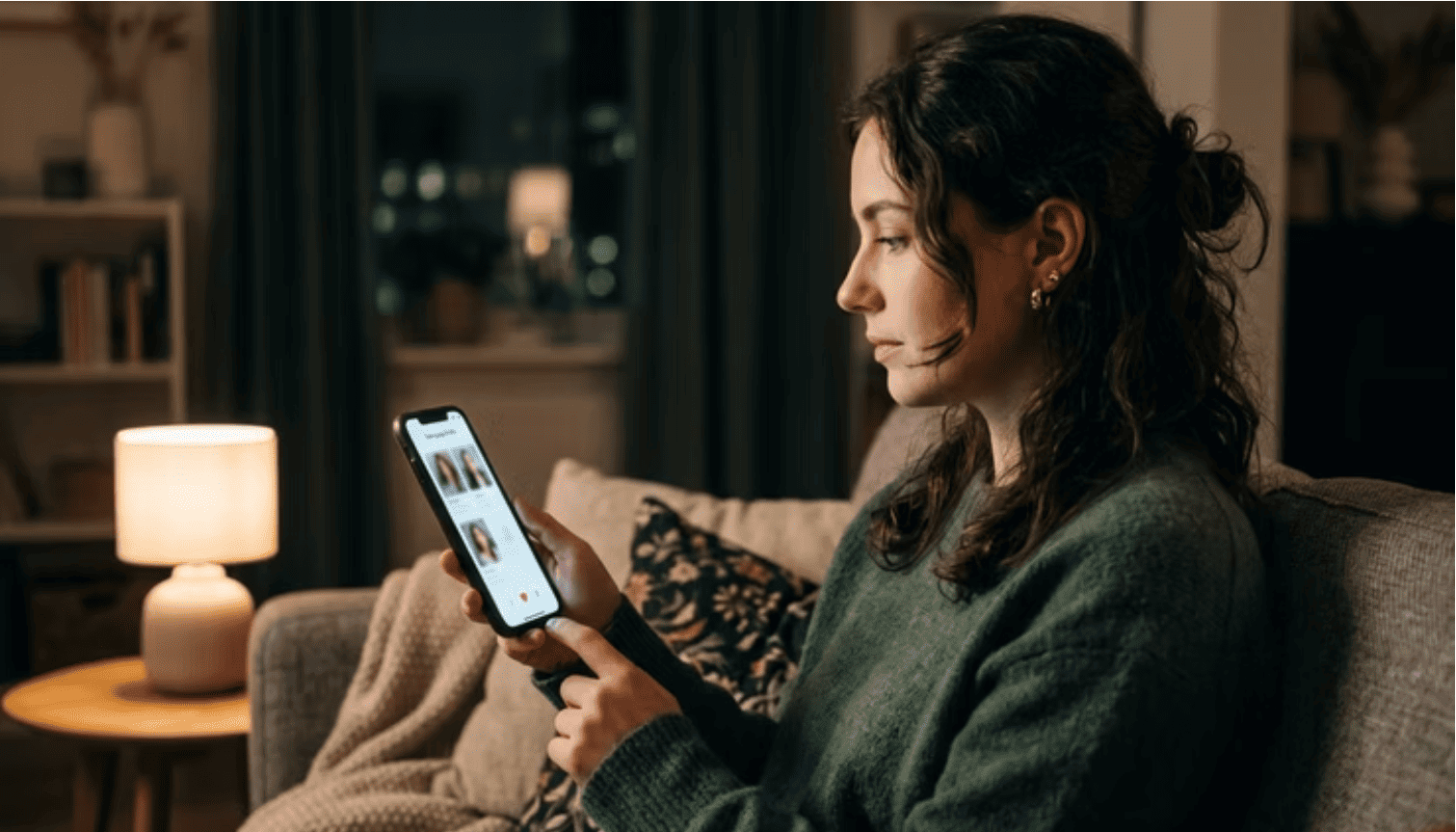
Dating apps turn choice into a habit
Choice can be useful. In dating, it can open doors that would not exist otherwise. Someone working long hours, new to a city, divorced, shy, LGBTQ+, or outside traditional social circles may find apps genuinely helpful. For many people, apps create access.
The problem begins when access becomes abundance, and abundance becomes emotional clutter.
Most dating apps are built around fast decisions. A profile is presented like an item in a catalog. The user evaluates it in seconds, often based on the first photo. This setup encourages a shopping mindset. People compare faces, bodies, hobbies, travel photos, prompts, and style cues the way they might compare products.
That does not mean users are shallow by nature. The interface trains shallow behavior. It rewards quick filtering. It offers the dopamine of a match. It keeps the next option visible or implied. Over time, the question can shift from “Could I connect with this person?” to “Can I do better?”
That shift matters.
When someone swipes through dozens of profiles, they may start to feel unusually powerful. They are the chooser, the evaluator, the one deciding who deserves attention. That can create an inflated sense of self-worth, not grounded in real confidence or emotional maturity, but in the illusion of endless desirability.
A match can feel like proof. A stack of matches can feel like status. Even people who rarely go on dates may feel validated by the attention. The app turns interest into a small trophy.
At the same time, many users are not reading profiles carefully. They skim. They look at the first photo, maybe the second. They notice height, body type, clothes, teeth, location, or whether the person seems “their type.” They may ignore thoughtful answers, shared values, emotional availability, or signs of compatibility.
Physical attraction matters. It always has. But when appearance becomes the main filter, substance gets pushed to the margins. A person who might be kind, funny, grounded, and compatible can be dismissed because their best photo was not first. Someone who looks exciting may be prioritized despite offering little depth.
The app makes this feel normal.
Disposability shows up in everyday dating behavior
The mindset of disposability rarely announces itself. It appears in small behaviors that have become so common that many people barely question them.
Ghosting is one of the clearest examples. Two people exchange messages, maybe share personal details, maybe even go out. Then one disappears without explanation. No closure. No simple “I do not think this is the right fit.” Just silence.
Ghosting is not always cruel in intent. Some people avoid conflict. Some feel overwhelmed. Some fear a difficult reaction. But swipe culture makes ghosting easier because the person on the other side can feel less real. They are a chat bubble, not a fully felt presence.
Other behaviors reflect the same pattern:
- Judging someone’s worth based on one awkward message
- Dropping a conversation because a newer match seems more exciting
- Keeping matches as backup options
- Unmatching after a harmless delay in response
- Treating dates like auditions rather than human encounters
- Searching for a flaw to justify moving on
- Comparing a real person to an imagined better option
The “better option” is central to swipe culture. Apps keep the possibility of someone else alive at all times. Even during a good conversation, a user may wonder who else is waiting. Even after a promising date, they may keep swiping.
This creates a strange tension. People say they want genuine connection, yet many behave as if connection should happen instantly and without friction. If chemistry is not immediate, they leave. If a conversation slows, they assume boredom. If a person has complexity, uncertainty, or needs, they may feel like too much work.
Real relationships do not form that way. They require attention, patience, and a willingness to see beyond first impressions. Swipe culture pushes in the opposite direction. It encourages speed over curiosity and selection over presence.
The psychological cost of being both chooser and chosen
Dating apps affect users on both sides of the swipe. They can inflate self-worth in one moment and damage it in the next.
Being the chooser can feel powerful. A user can reject people silently, instantly, and often. That can create a sense of control. Yet the same person is also being judged just as quickly by others. Their own profile is also being scanned, ranked, ignored, or dismissed.
This creates a fragile loop. Validation feels available but unstable. A match brings a lift. No matches can trigger doubt. A message creates hope. A sudden silence can feel personal, even when it may have nothing to do with the person who was ignored.
For some users, this leads to emotional exhaustion. They begin to expect disappointment. They may become guarded, cynical, or numb. Instead of approaching a new match with openness, they brace for rejection or disappearance.
For others, apps can increase comparison. Users see profiles that seem more attractive, more adventurous, more successful, or more socially polished. They may start editing themselves into a marketable version: better photos, sharper prompts, more impressive hobbies, less vulnerability.
The profile becomes a performance.
That performance can create distance between how someone appears and who they actually is. A person may feel pressure to look effortless, fun, fit, witty, and emotionally low-maintenance. The messy parts of being human get hidden. The profile says “easygoing,” even if the person wants depth. It says “just seeing what’s out there,” even if they want love.
This can make dating feel less like meeting and more like branding the self. The result is often loneliness in disguise. People are connected to more profiles than ever, yet may feel less seen.
When dating becomes a marketplace, people may start measuring their worth by demand rather than by dignity.
That line is hard because it cuts both ways. People want to be desired. That is normal. But desire measured by app activity can become unstable fuel. It can make people chase attention rather than intimacy.
Genuine connection needs a slower kind of attention
A meaningful relationship rarely begins with perfect certainty. It often begins with enough interest to keep learning.
Swipe culture trains people to decide quickly, but connection usually asks for a slower pace. It needs room for context. A dry first message may come from nervousness, not dullness. A less polished profile may belong to someone thoughtful who dislikes self-promotion. A person who does not photograph well may be warm, magnetic, and deeply compatible in person.
This does not mean people should ignore attraction or force interest where none exists. It means the instant filter is not always wise.
Genuine connection depends on several things that apps do not naturally encourage:
Curiosity
Reading the full profile. Asking specific questions. Paying attention to answers. Noticing values, humor, and emotional tone.
Presence
Talking to fewer people at once. Giving a conversation enough space to develop. Resisting the urge to swipe during a promising exchange.
Respect
Ending interactions clearly when needed. Treating the other person as someone who deserves basic consideration, even if the connection is brief.
Self-awareness
Noticing when swiping becomes compulsive, avoidant, or validation-seeking. Asking whether the app is being used to meet people or to regulate mood.
Patience
Accepting that real compatibility may take more than one witty opener or a perfect first date.
The challenge is that dating apps are designed for engagement, while relationships are built through attention. Those are not the same thing. Engagement keeps people tapping. Attention helps people understand.
How to date with more intention in a swipe-driven world
Dating apps are not going away. The goal is not to shame people for using them. The better question is how to use them without absorbing their worst lessons.
A more intentional approach starts with changing the rhythm.
Set limits around swiping. Instead of scrolling through profiles whenever boredom hits, use the app at specific times. This reduces mindless judgment and makes each profile feel less disposable.
Read before swiping. Look beyond the first image. Notice whether the person’s values, lifestyle, and relationship goals seem compatible. A beautiful photo cannot carry a relationship alone.
Message with specificity. A thoughtful message based on the profile creates a different tone than “hey” or a generic compliment. It signals that the person was actually seen.
Avoid collecting matches. Too many open conversations can make everyone feel interchangeable. Fewer conversations often lead to better attention.
Be honest when interest fades. A short, kind message is usually better than vanishing. Something as simple as “I enjoyed talking, but I do not feel the connection I’m looking for” can restore a little humanity to a process that often strips it away.
Move offline when it feels safe and appropriate. Endless messaging can create fantasy, pressure, or fatigue. A low-pressure meeting in a public place can reveal more than days of texting.
Take breaks. If the app starts to create anxiety, resentment, compulsive checking, or numbness, stepping away is not failure. It can be a reset.
The deeper work is internal. Dating well requires knowing the difference between standards and constant dissatisfaction. Standards protect values and well-being. Constant dissatisfaction keeps people chasing an imagined person who never disappoints.
No app can solve that.
A swipe-driven dating culture can make people believe that love should feel instantly obvious, endlessly exciting, and free of awkwardness. Real love is usually more grounded. It grows through repeated acts of attention. It survives imperfect timing, ordinary conversations, and the slow discovery of another person’s inner life.
Modern dating asks people to hold two truths at once. Apps can create real opportunities, and they can also train habits that weaken connection. The difference often lies in how consciously people use them.
Behind every profile is someone with a history, fears, hopes, contradictions, and a life that cannot fit inside a few photos. Remembering that does not guarantee love. It does make respect more likely. And in a culture that makes people easy to replace, respect may be the first step back toward genuine connection.
If you want better introductions and not endless swiping,
join the Friendli Waitlist or download the app:
https://cms.prodservers.com/friendli/become-a-founder/#waitlist